
Tiny Toon Adventures Gameplay
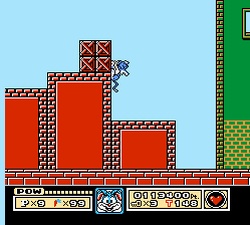
Experiencing the gameplay of “Tiny Toon Adventures” is like stepping into a Saturday morning cartoon, controller in hand. Every stage bursts with personality, from grassy fields to spooky castles, and each environment feels alive with detail and mischief. The player’s ability to switch characters mid-run adds a strategic layer uncommon for NES platformers. Deciding whether to use Plucky’s flutter, Dizzy’s destructive spin, or Furball’s wall climbing isn’t just about preference — it’s about survival. The deeper you go, the more the game demands you master the strengths and weaknesses of each character, weaving them into your style. This sense of choice and agency was groundbreaking for kids used to one-hero adventures. Suddenly, you weren’t just guiding a mascot through levels; you were managing a small ensemble cast, much like a director handling a cartoon episode.
Yet beneath the playful exterior, there’s a surprising level of challenge. The timing of jumps, the precision needed to dodge traps, and the awareness required to manage multiple characters create a constant sense of pressure. The NES version doesn’t hold your hand — it demands patience and persistence. Losing a character mid-level isn’t just a setback; it reshapes your entire approach. That cycle of loss, adaptation, and triumph mirrors the humor of the cartoon: failure is part of the comedy, and bouncing back is part of the joy. You laugh when Plucky falls short of a ledge, you grit your teeth when Furball misses a climb, and you cheer when Dizzy clears a path of enemies with his whirlwind. All of it weaves together into gameplay that feels equal parts slapstick and strategy. Reading through retrospectives about its gameplay, critics often point to its balance of humor and difficulty as a reason why it still resonates decades later. In every way, the game proved that fun and challenge could exist in perfect harmony.